
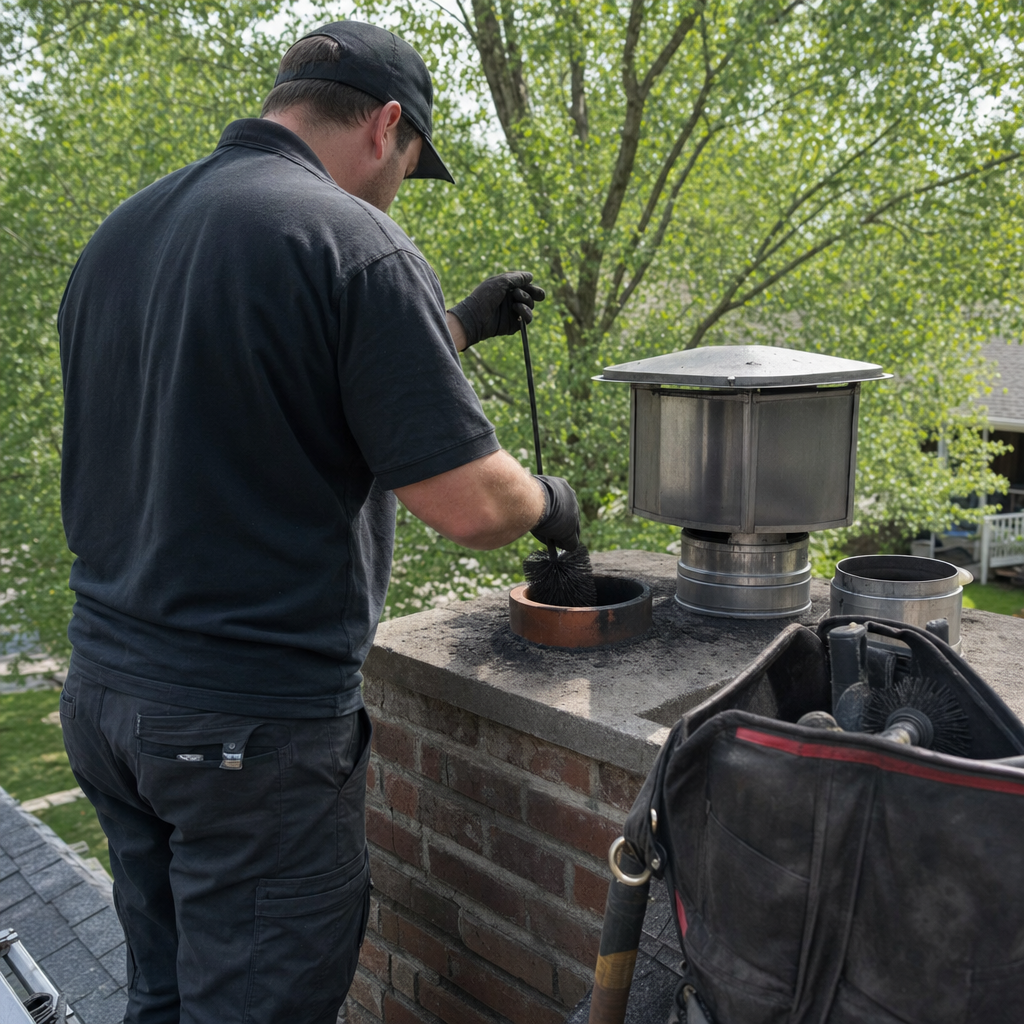
Chimney Crown Repair Cost in Knoxville, TN: $275–$1,850 Depending on What You’re Actually Looking At
In Knoxville, chimney crown repair typically runs $275 for a sealant treatment on hairline cracks, $650–$950 for resurfacing with a professional-grade slurry like CrownCoat, and $1,200–$1,850 for full crown removal and rebuild. Most homeowners call us at (877) 318-5851 after spotting cracking from the ground and don’t yet know which stage they’re in — and that’s exactly the problem, because guessing wrong means paying for a repair that fails within two winters.
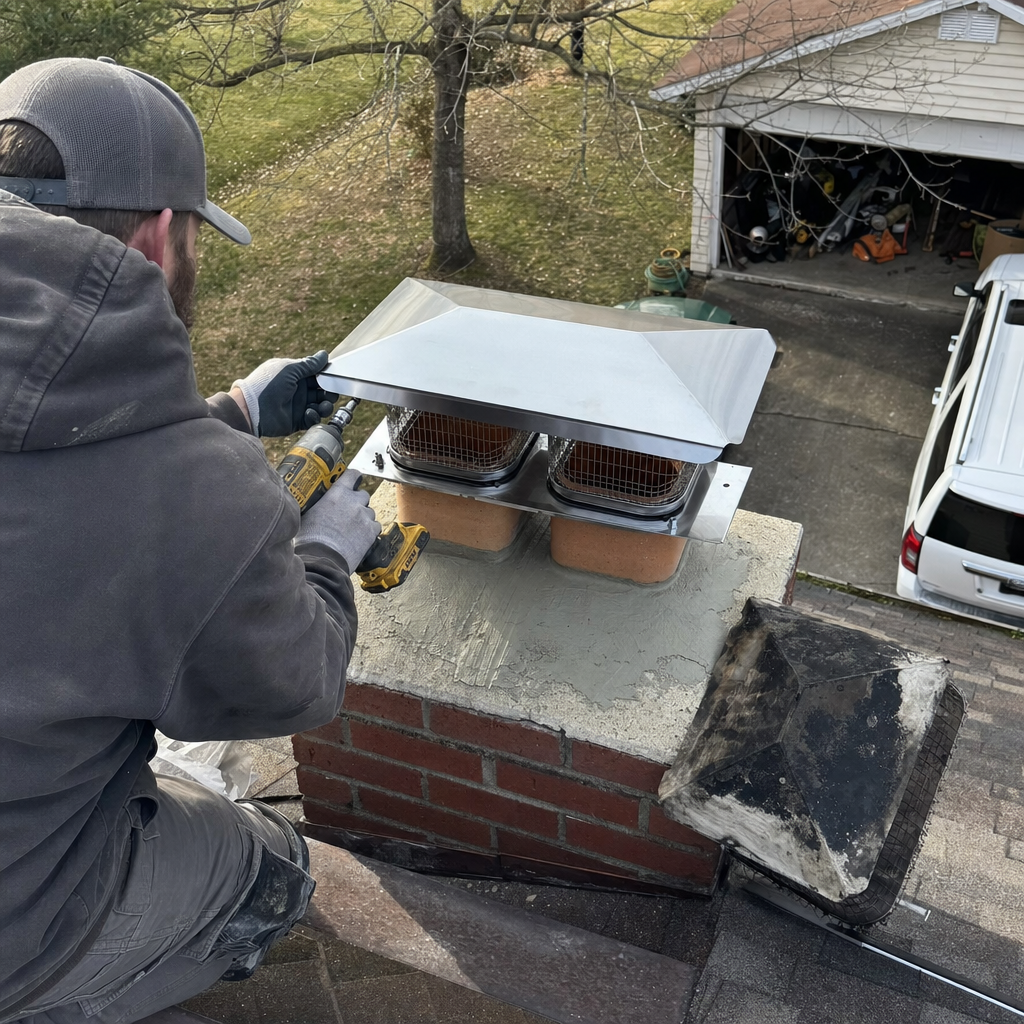
Charles Rodriguez, our owner and lead technician, has spent 17 years on Knoxville rooftops, and he’ll tell you straight: the crown that looks like it just needs a coat of sealant is often a crown that needs to be rebuilt. The difference between those two jobs is sometimes $600, and it always matters for how long the fix lasts.
Why Knoxville Crowns Fail Differently Than Crowns Anywhere Else
Here’s what the generic cost guides don’t explain. The Tennessee Valley’s humidity pattern saturates crown concrete through late summer and fall, then Knoxville’s winters do something particularly destructive — they oscillate frequently around 32°F rather than holding steady cold. That repeated freeze-thaw cycling fractures concrete from the inside out more aggressively than a single hard freeze would.
We’ve pulled apart crowns in Sequoyah Hills, Fourth & Gill, and Fountain City that looked superficially cracked but were structurally shattered inside. The surface sealant some handyman slapped on two years prior? It trapped that moisture right where the freeze-thaw could work on it. By the time we’re called, the repair has doubled in cost.
On homes over 30 years old in Knoxville, crown cracking and cap failure is nearly universal. The combination of elevated valley humidity and that punishing freeze-thaw oscillation doesn’t give old concrete much of a chance.
The Three Stages of Crown Failure — And What Each Actually Costs
When Charles climbs your roof, he’s looking for one of three distinct conditions. Each has a specific repair method, a specific cost range, and a specific expected lifespan. Misidentifying the stage is the most common reason homeowners pay twice for the same problem.
Stage One: Hairline Surface Cracking
What you’ll see: Fine spider-web cracks across the crown surface, no visible separation, no pieces missing, no exposed flue tile edges. The crown still sheds water in a rainstorm.
What’s actually happening: The concrete’s top layer is beginning to degrade from UV exposure and minor moisture penetration, but the structural body of the crown remains sound.
The honest repair: Professional-grade sealant application after thorough cleaning and prep. We use products from Copperfield and Famco — not hardware-store brush-on coatings that peel in eighteen months.
Cost: $275–$400
Expected lifespan: 5–8 years with Knoxville’s climate, assuming the crown was truly a Stage One candidate and not a Stage Two problem hiding under surface cracks.
Stage Two: Deep Structural Fracture
What you’ll see: Cracks you can fit a nickel into, visible separation between crown sections, slight spalling or flaking at crack edges, possible minor water staining on the brick below. The crown may feel “hollow” when tapped.
What’s actually happening: Moisture has penetrated through the surface and is actively fracturing the concrete body. Freeze-thaw cycling is now working on the interior structure. Sealant alone will trap water inside and accelerate the damage.
The honest repair: Resurfacing with a professional slurry system — we typically use CrownCoat or equivalent professional-grade material from Olympia Chimney — applied after crack chasing, priming, and sometimes mesh reinforcement for wider fractures.
Cost: $650–$950
Expected lifespan: 10–15 years when properly applied. This is the most commonly misquoted job in Knoxville — too many companies sell sealant on crowns that need resurfacing, or push rebuilds on crowns that could be saved.
Stage Three: Full Crown Failure
What you’ll see: Pieces missing, exposed flue tile, visible rust on the flue liner, water pooling on the crown surface (it’s no longer sloped), or the crown has separated entirely from the chimney body. You may see interior water damage on ceilings near the fireplace.
What’s actually happening: The crown has lost structural integrity. Water is entering the chimney system, potentially damaging the flue liner, smoke chamber, and surrounding framing. This is no longer a maintenance issue — it’s active system protection failure.
The honest repair: Complete removal of the failed crown and pour of a new reinforced concrete crown with proper specifications: minimum 2-inch overhang beyond the chimney face, minimum 3/4-inch slope from flue to edge, expansion gap around flue tiles, and reinforcement mesh. We specify professional-grade mixes and finishing systems — this isn’t a bag of Quikrete and a trowel.
Cost: $1,200–$1,850
Expected lifespan: 20–30 years with proper materials and installation.
| Failure Stage | What You See | Repair Method | Cost Range |
|---|---|---|---|
| Stage One: Hairline Cracking | Fine surface cracks, intact structure | Professional sealant (Copperfield/Famco) | $275–$400 |
| Stage Two: Deep Fracture | Wide cracks, separation, minor spalling | Resurfacing with slurry system (Olympia Chimney) | $650–$950 |
| Stage Three: Full Failure | Missing pieces, exposed flue, pooling water | Complete removal and reinforced rebuild | $1,200–$1,850 |
How to Evaluate a Crown Repair Bid in Knoxville
Not every company that offers “crown repair” is offering the same thing. Here’s what separates a proper repair from a patch job that’ll have you calling again in two years:
- Overhang: A proper crown extends at least 2 inches past the chimney face on all sides. No overhang means water runs straight down the brick — we’ve seen “repairs” in Old North Knoxville where the crown was flush with the chimney wall.
- Slope: The crown must slope minimum 3/4 inch from flue to edge. Flat crowns pool water; in Knoxville’s humidity, that’s guaranteed penetration.
- Expansion gap: There should be a visible gap between the crown edge and flue tile, filled with flexible sealant. Concrete and clay expand at different rates — without this gap, the crown cracks at the flue within a few seasons.
- Mix specification: A proper crown uses a concrete mix with air entrainment for freeze-thaw resistance, not standard mortar or bagged surface patch. Ask what mix they’re using; if they can’t name it, that’s information.
- Flashing integration: The crown must integrate properly with existing flashing. We’ve found crowns poured right over damaged flashing, which just moves the leak problem six inches lower.
Charles handles every assessment personally — he’s the one on your roof, not an apprentice sent to take photos for a bid committee. After 17 years of chimney-only work in Knoxville, he can distinguish a Stage One from a Stage Two crown on sight, and he won’t recommend a $1,200 rebuild when a $650 resurfacing is the honest answer.
Common Local Scenarios We See on Knoxville Roofs
The Sequoyah Hills Centennial Home: Original crown from a 1920s masonry chimney, perhaps patched multiple times. The concrete has no air entrainment — it was never designed for modern freeze-thaw cycling. These almost always need full rebuild with contemporary specifications. We’ve done dozens in this neighborhood; the historic character stays, but the crown has to come into the current century.
The Fountain City Ranch with a “Recent” Patch: Previous owner had someone seal the crown five years ago. The sealant looked fine from the ground, but moisture was trapped underneath, and now we’ve got Stage Two fractures across 60% of the surface. The homeowner thought they’d bought time; they actually accelerated the failure.
The East Knoxville Flip with Cosmetic Cover-Up: Crown painted with elastomeric roof coating to look fresh for sale. No structural repair underneath. We see this regularly — it buys the seller about eighteen months before the new owner discovers the real condition. If you’re buying a home with a “recently maintained” chimney, get an independent inspection.
The Self-Harvested Wood Burner in Powell or Corryton: Not a crown issue directly, but related — heavy burning of under-seasoned hardwood generates acidic condensation that accelerates crown deterioration from the flue side. These homeowners often need crown work earlier than expected, combined with liner assessment. We use DuraFlex liner systems when relining is part of the solution.
What Happens When You Call Titan
Charles will ask a few questions over the phone — what you’re seeing, the home’s age, any recent work — then schedule an inspection, typically within a few days. He arrives with a ladder, a camera, and 17 years of knowing what Knoxville chimneys do. You’ll get a written assessment with photos, a clear stage diagnosis, and one recommended approach — not a menu of options designed to confuse.
Our Chimney Cap & Crown work is part of our full-system capability. If your crown failure has damaged the flue liner, if the cap is missing or improperly sized, if the flashing needs attention — we handle it. No referrals out, no gaps in scope. Nearly 1,200 homeowners have reviewed us at 4.9 stars because the job gets done completely, not partially.
A clean chimney isn’t a luxury — it’s just what stands between your fireplace and your ceiling. The crown is what stands between your chimney and the Knoxville weather. Both matter, and both deserve someone who knows the difference.
FAQs
Chimney crown repair in Knoxville costs $275–$400 for sealant treatment of hairline cracks, $650–$950 for resurfacing of structurally fractured crowns, and $1,200–$1,850 for full removal and rebuild of failed crowns. Call (877) 318-5851 for a free inspection and exact quote — we don’t guess from the ground.
Sealing is cheaper upfront at $275–$400, but applying sealant to a crown with deep structural fractures actually costs more over time because it traps moisture and accelerates failure. An honest assessment determines which stage you’re in — Charles Rodriguez evaluates every crown personally to recommend the right repair, not the easy sale. Call (877) 318-5851 for a free estimate.
Sealant and most resurfacing jobs are completed in a single visit; full crown rebuilds typically require two visits — one for form-building and pour, a second for form removal and final sealing after cure. We schedule around Knoxville’s weather windows to ensure proper curing conditions. Call (877) 318-5851 to check current availability.
Properly applied sealant lasts 5–8 years, professional resurfacing lasts 10–15 years, and a full rebuild with air-entrained concrete and correct specifications lasts 20–30 years even with Knoxville’s aggressive freeze-thaw cycling. The key variable is whether the original diagnosis matched the actual failure stage — misidentified repairs fail prematurely. Call (877) 318-5851 for an assessment you can trust.
Get an Honest Assessment Before the Next Freeze Cycle
Every winter that passes with a compromised crown is a winter where water’s working deeper into your chimney system. In Knoxville’s climate, that doesn’t correct itself — it compounds. Charles Rodriguez will tell you exactly what stage you’re in, exactly what it costs to fix properly, and exactly why. No sealant-over-a-fracture, no rebuild-when-resurfacing-would-do. Just 17 years of chimney-only experience applied to your specific roof.
Call (877) 318-5851 today for a free estimate. Titan Chimney Cleaning Service Knoxville serves homeowners throughout Knoxville and the surrounding valley — from historic Sequoyah Hills to Fountain City, from Fourth & Gill to the exurban communities north of the city.
Written by Charles Rodriguez, Owner & Lead Technician at Titan Chimney Cleaning Service Knoxville, serving Knoxville, TN.