
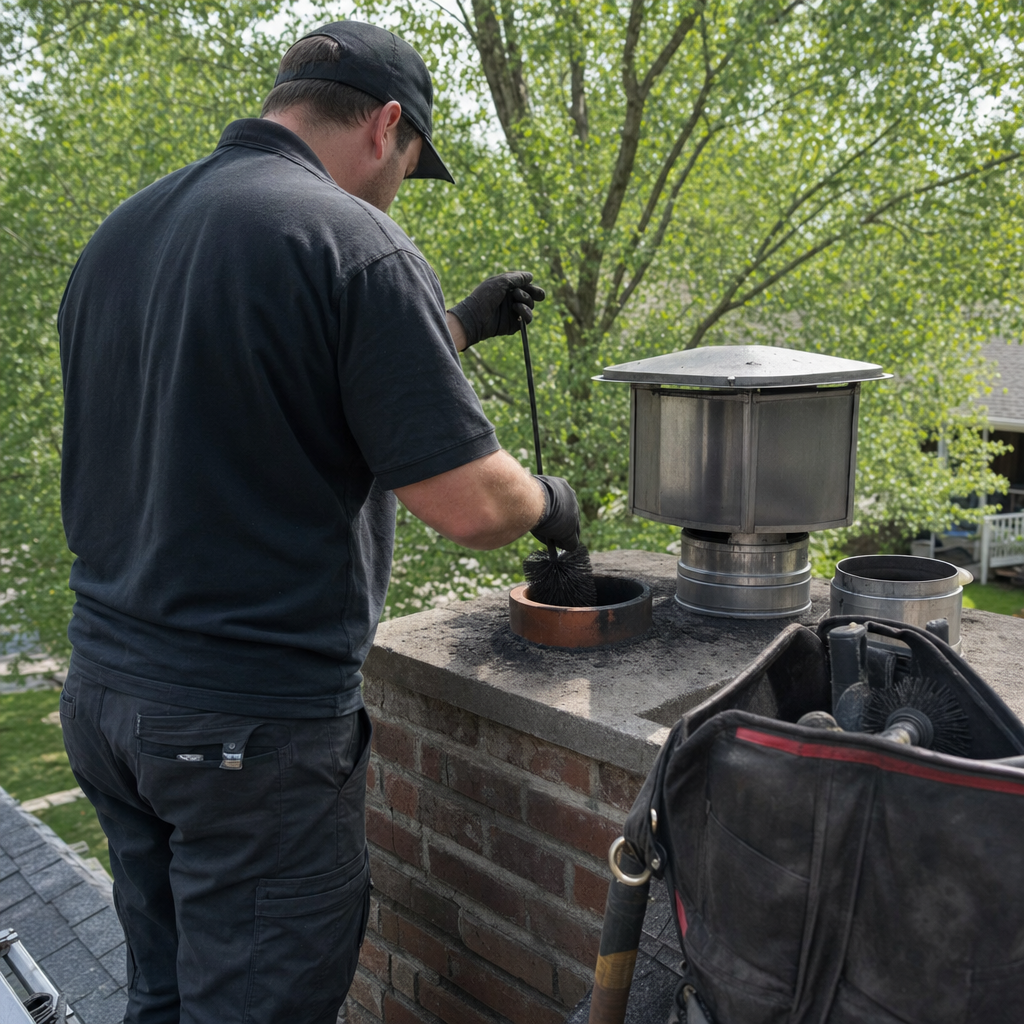
Chimney Liner Installation Cost in Knoxville, TN: What Your House’s Age Actually Means for Your Quote
Chimney liner installation in Knoxville typically runs between $2,800 and $6,500, with most homeowners landing in the $3,200–$4,800 range for a standard stainless steel flex liner with professional installation. Historic masonry homes in Fourth & Gill or Old North Knoxville often push toward the higher end due to unlined or deteriorated clay-tile flues, while mid-century ranches in East Knoxville with undersized coal-conversion flues usually fall mid-range once properly resized. Call (877) 318-5851 for a free, exact quote — Charles handles every assessment personally.
A liner quote that doesn’t account for what decade your Knoxville house was built and what fuel it was originally designed to burn isn’t a real quote — it’s a placeholder. We’ve been up on enough Knoxville rooftops over 17 years to know that two homes on the same block can have radically different liner needs based on nothing more than construction era and original heating fuel. The 1920s Victorian on Luttrell Street with a crumbling clay flue tile system needs something entirely different from the 1957 ranch off Magnolia with a 6-inch coal flue someone’s been cramming oak into for three winters. Both are safety issues. Neither gets fixed with the same approach, and neither should cost the same.
Two Knoxville Housing Types, Two Very Different Liner Problems
Knoxville’s housing stock splits cleanly into two categories that matter for liner pricing, and most generic cost guides from national sites never make this distinction. That’s a problem, because sending the wrong solution to the wrong flue geometry wastes money and leaves the homeowner with a system that still doesn’t draft safely.
Historic Masonry: Fourth & Gill, Old North Knoxville, and Sequoyah Hills
These neighborhoods are packed with late-19th and early-20th century masonry chimneys — the kind with handsome brickwork, ornate corbelling, and flue systems that predate any modern IRC standard by a century. Many were built fully unlined. Others got clay flue tiles that have now spalled, cracked, or shifted after decades of Knoxville’s aggressive freeze-thaw cycling. Our winters don’t stay cold; they oscillate above and below freezing, which fractures mortar joints and spalls brick faces faster than in cities where temperatures hold steady.
What we find on these jobs: flue tiles with gaps you can slide a finger through, deteriorated parging that’s exposed raw brick to combustion gases, and sometimes no liner at all — just a rough masonry tunnel venting smoke and carbon monoxide through the wall cavity. In Sequoyah Hills, where Charles grew up and still lives, we’ve pulled out clay tile sections that crumbled at the touch after 90 years of moisture cycling from the Tennessee River valley’s persistent humidity.
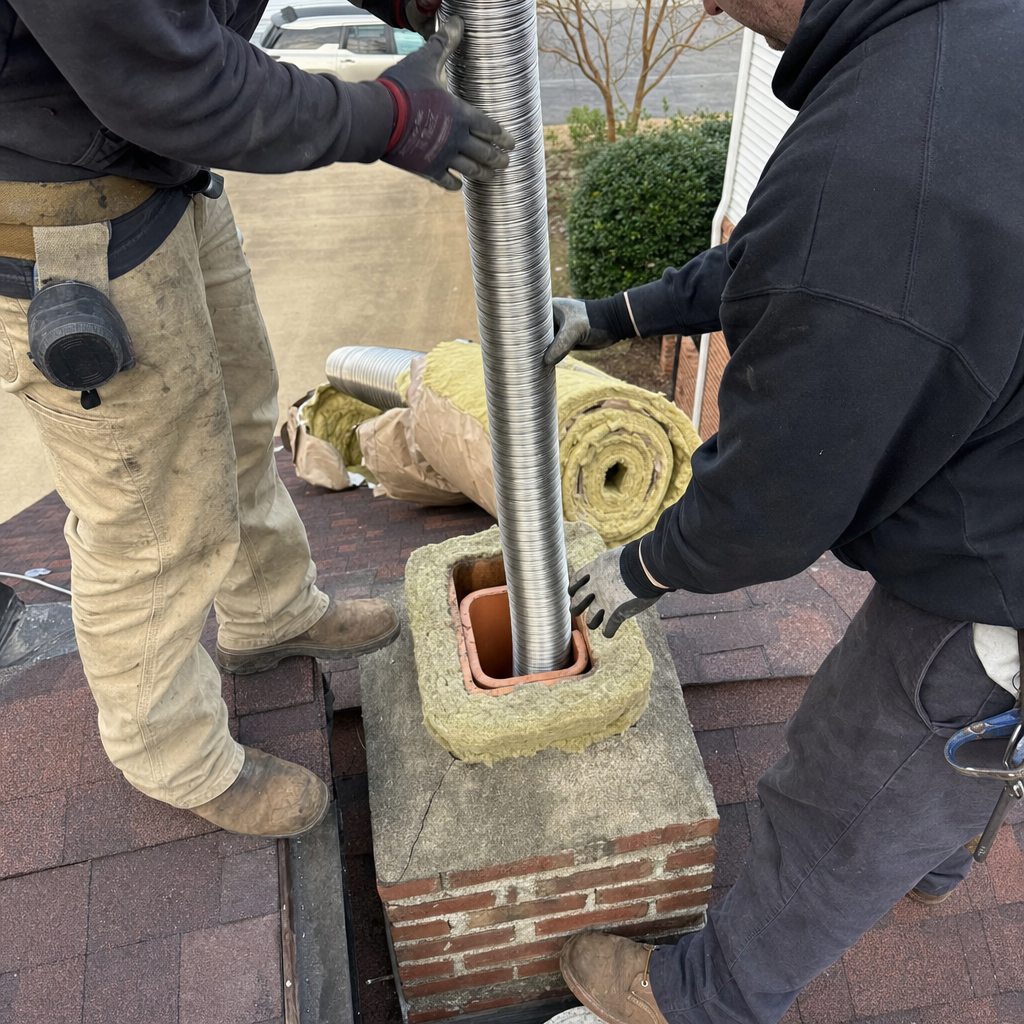
The solution here is typically a full stainless steel flex liner — we use DuraFlex for these applications — sized precisely to the appliance and dropped from the top with a proper top plate and insulation wrap. The labor is intensive: careful tile removal if any remain, thorough flue cleaning to remove decades of glazed creosote, and precise fitting to handle the often-irregular flue dimensions of historic construction.
Mid-Century Ranch: East Knoxville, Fountain City, and Similar Tracts
The post-war building boom across East Knoxville and Fountain City produced thousands of single-story homes with small, efficient fireplaces — originally designed for coal conversion or early gas inserts, with flues sized accordingly. The typical coal-conversion flue runs about 6 inches, sometimes 7, which is dangerously undersized for a modern wood-burning insert or even a properly sized open fireplace burning Appalachian hardwood.
Homeowners in these neighborhoods often don’t realize the mismatch. They’ve been burning oak or hickory from surrounding timber tracts — sometimes green or under-seasoned, given how easy firewood is to come by in this market — and wondering why smoke backs into the living room on cold, still evenings. That backdrafting isn’t a damper problem. It’s a flue physics problem: too small a passage for too much exhaust volume, made worse by the temperature inversions that Knoxville’s basin geography produces when Sharp’s Ridge and the Cumberland Plateau escarpment trap cold air layers in fall and early winter.
These jobs need a correctly sized liner insert — upsized to match the appliance’s BTU output and fuel type — which changes both material cost and the complexity of the connection at the firebox. Sometimes we can use a HeatShield cerfractory resurfacing system if the existing flue is structurally sound but needs sealing; more often, a full liner replacement is the only safe path.
Chimney Liner Installation Cost Breakdown for Knoxville Homes
The table below shows realistic installed pricing ranges based on what we’ve quoted and completed across Knoxville’s neighborhoods. These include materials, labor, proper insulation, top plate or cap, and code-compliant connection — not a kit price from a hardware store.
| Liner Type & Scenario | Typical Range |
|---|---|
| Standard stainless flex liner (mid-century ranch, straightforward insert) | $2,800 – $3,800 |
| Stainless flex liner with tile removal (historic masonry, clay tile demo) | $3,800 – $5,200 |
| Insulated stainless liner with upsizing (coal-flue conversion to wood) | $4,200 – $5,800 |
| HeatShield cerfractory resurfacing (sound flue, surface restoration only) | $2,200 – $3,400 |
| Complex historic rebuild with custom top plate and multiple offsets | $5,000 – $6,500 |
These figures reflect professional-grade materials — DuraFlex stainless, HeatShield cerfractory slurry, Gelco caps and top plates where specified — not the thin-gauge or uninsulated products that some installers source to hit a low bid. We’ve been called in after those jobs fail, and the homeowner pays twice.
HeatShield vs. Full Stainless Liner: When Each Makes Sense
Most Knoxville homeowners we meet have never heard of HeatShield, and that’s fair — it’s a specialized product, not a household name. It’s a cerfractory (ceramic-refractory) slurry system that’s pumped or sprayed onto the interior of an existing clay flue tile, creating a smooth, sealed, insulated surface that meets NFPA 211 standards for relining. Think of it as resurfacing rather than replacing.
HeatShield works when the existing clay tile is largely intact — no major cracks, no missing sections, no structural shifting — but the surface has deteriorated, the mortar joints have opened, or the parging has fallen away. We’ve used it successfully in Fountain City ranches where the 1960s clay tile was sound but rough, and in some Sequoyah Hills homes where the flue was in better shape than the crown above it. The cost savings are real, typically $800–$1,500 less than a full stainless liner, and the 20-year warranty is solid.
But HeatShield is not a magic workaround. If the clay tile is cracked through, if there are gaps between tile sections, if the flue is unlined masonry, or if we find the kind of third-degree glazed creosote that Knoxville’s heavy hardwood-burning habits produce — especially in exurban areas like Powell and Corryton where homeowners harvest their own under-seasoned wood — then a full DuraFlex stainless liner is the only responsible choice. Charles makes that call on-site, with a camera inspection, and he’ll show you exactly what he’s seeing. No guesswork, no upsell — just the right fix for the actual condition of your flue.
What Happens When You Don’t Reline: The True Cost
We don’t use scare tactics, but we do state facts plainly. An unlined or deteriorated clay-tile flue in a Fourth & Gill Victorian isn’t a code nuisance — it’s a fire and carbon monoxide exposure risk to the family sleeping 15 feet from that wall. We’ve seen the aftermath.
A chimney fire in an unlined historic flue doesn’t stay contained. It breaches through cracked tile or missing parging into the wall cavity, and from there it has access to floor joists, roof framing, and the spaces between stories. The average chimney fire claim in our region runs $18,000–$45,000 in structural damage, smoke remediation, and temporary displacement — before you even address the chimney itself. Then you’re looking at full rebuild costs, not just liner replacement.
Carbon monoxide is quieter but no less serious. A deteriorated flue with gaps or missing tiles can vent exhaust into the home during low-draft conditions — exactly the kind of still, inversion-heavy evenings that Knoxville’s basin geography produces. CO detectors help, but they’re a last line of defense, not a solution to a failed venting system.
The math is straightforward: liner installation at $3,500–$5,000 versus fire or CO exposure with costs that multiply by five or ten. We’ve never had a homeowner who delayed relining and was glad they waited.
Why Knoxville’s Climate Makes Liner Condition a Bigger Deal
Our local conditions accelerate chimney deterioration in ways that flatter, drier markets don’t experience. The freeze-thaw cycling we mentioned fractures masonry. The Tennessee River and TVA impoundments keep ambient humidity elevated year-round, driving moisture into chimney crowns and caps — which is why crown cracking and cap failure are near-universal on Knoxville homes over 30 years old. That moisture penetrates to the flue liner, accelerates clay tile spalling, and promotes the acidic condensation that eats away at any metal components.
Add to that the fuel behavior: Knoxville’s immediate access to Appalachian hardwood means homeowners burn heavily and regularly, and not always with properly seasoned wood. Green oak generates dense, acidic third-degree creosote at a pace that technicians from more suburban, less forested markets find surprising. That creosote is corrosive to metal liners if present during installation, and it’s combustible at temperatures that a normal fire reaches easily. We clean thoroughly before any liner goes in — it’s non-negotiable, and it’s part of why our installs last.
How Titan Chimney Handles Liner Installation
Charles Rodriguez, our owner and lead technician, performs every liner assessment and installation personally. That’s not marketing language — it’s how the business operates. When you call (877) 318-5851, you’re scheduling time with the same person who’ll be on your roof, running the camera, and making the call on HeatShield versus DuraFlex versus a more complex rebuild.
Our process:
- Camera inspection first — we look before we quote, because flue condition determines everything that follows.
- Exact sizing calculation — fuel type, appliance BTU output, flue height, and local draft conditions all factor into liner diameter and insulation requirements.
- Material selection with context — we specify DuraFlex, HeatShield, Gelco, or Olympia Chimney components based on what your specific flue geometry and fuel demand, not what we have in the truck.
- Full-system verification — after installation, we test draft, verify clearance to combustibles, and document the completed work for your records and any insurance or real-estate requirements.
Nearly 1,200 homeowners have reviewed our work at a 4.9-star average, and the consistent feedback we hear is that people appreciate having the most experienced person on the job — not a subcontractor they’ve never met. Charles handles it personally, from the first phone call to the final smoke test. A clean chimney isn’t a luxury — it’s just what stands between your fireplace and your ceiling.
For the complete scope of our liner and rebuild services, see our Chimney Liner & Rebuild page.
FAQs
Most Knoxville homeowners pay between $2,800 and $6,500 for professional chimney liner installation, with the majority of jobs falling in the $3,200–$4,800 range. Historic homes in neighborhoods like Fourth & Gill or Old North Knoxville with unlined or deteriorated clay-tile flues typically run higher due to additional labor for tile removal and irregular flue geometry. Call (877) 318-5851 for a free, exact quote based on your specific flue condition — estimates are free.
Repair is sometimes possible with HeatShield cerfractory resurfacing at $2,200–$3,400, but only if the existing clay tile is structurally intact with no major cracks or missing sections. If the tile is cracked through, shifted, or missing entirely — common in pre-1940 Knoxville masonry — a full stainless steel liner is the only safe option and costs more upfront but eliminates repeated repair cycles. Charles assesses this with a camera inspection and will show you exactly what your flue looks like before recommending either path. Call (877) 318-5851 to schedule.
Same-day installation is possible for straightforward jobs where the flue is already clean and accessible, but most liner installations in Knoxville require a second visit because we need to thoroughly clean glazed creosote — especially common with local hardwood burning habits — and verify flue dimensions after the inspection. We prioritize safety over speed, and we’ll give you a realistic timeline when we quote. For urgent situations, call (877) 318-5851 and we’ll work out the fastest safe schedule.
The sure signs are visible clay tile cracks or gaps, smoke or CO backup into the home, excessive creosote buildup despite regular sweeping, or a flue that’s never been lined at all — common in Knoxville’s historic neighborhoods. But some deterioration is hidden until a camera inspection reveals it. If your home is pre-1980 and the liner history is unknown, we strongly recommend an inspection before another burning season. The cost of finding out is minimal; the cost of not knowing can be catastrophic. Call (877) 318-5851 for a free inspection and honest assessment.
Get Your Exact Chimney Liner Quote in Knoxville
Don’t settle for a placeholder quote that ignores your home’s age, fuel history, and flue condition. Charles Rodriguez will assess your chimney personally, explain what he’s seeing in plain terms, and give you a precise, no-surprise price for the right liner solution — whether that’s HeatShield resurfacing, a DuraFlex stainless install, or a more complex rebuild. Titan Chimney Cleaning Service Knoxville is insured and bonded, with 17 years of chimney-only experience and nearly 1,200 verified reviews behind every job. Call (877) 318-5851 today for your free estimate.
Written by Charles Rodriguez, Owner & Lead Technician at Titan Chimney Cleaning Service Knoxville, serving Knoxville, TN.